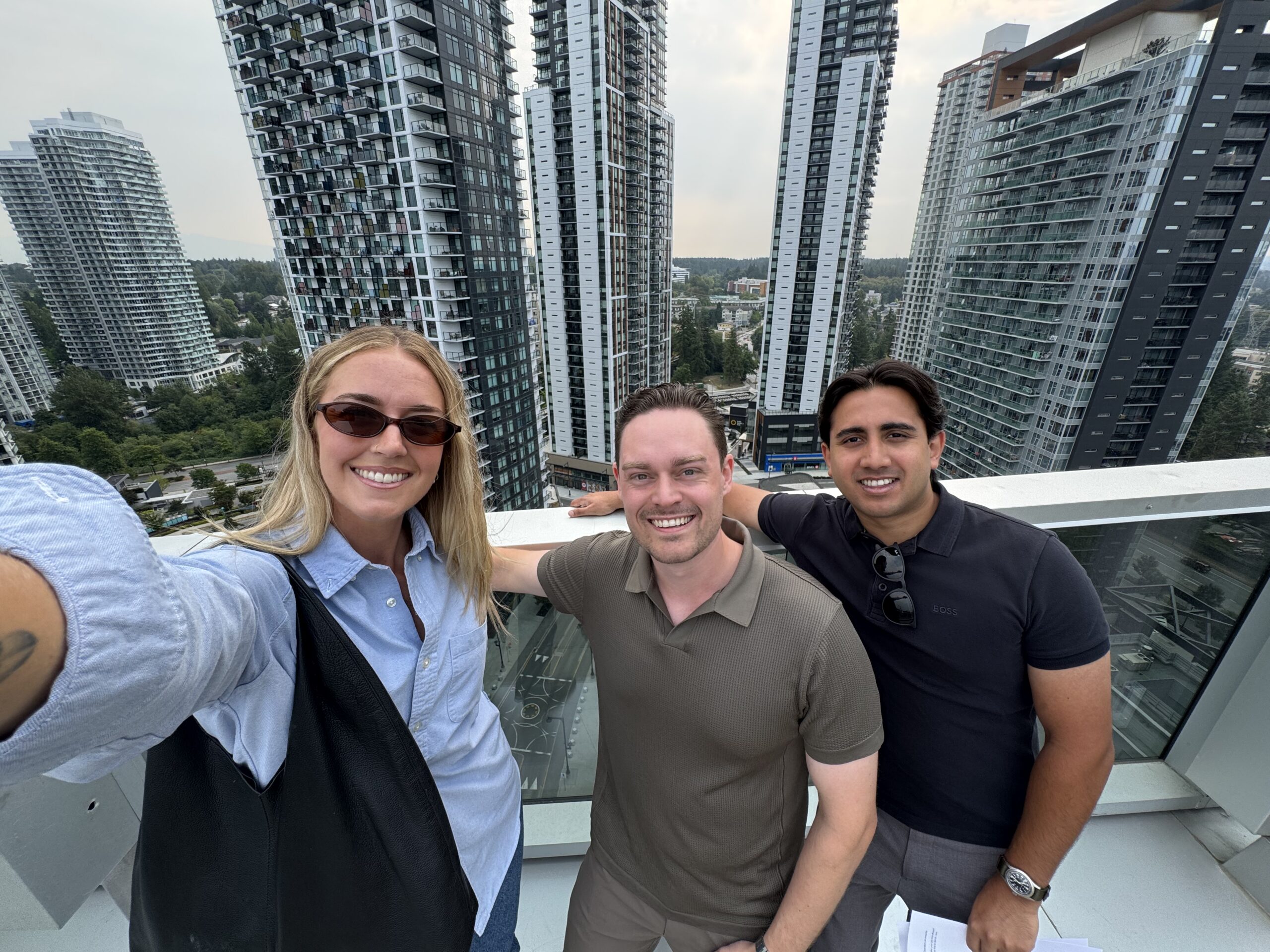
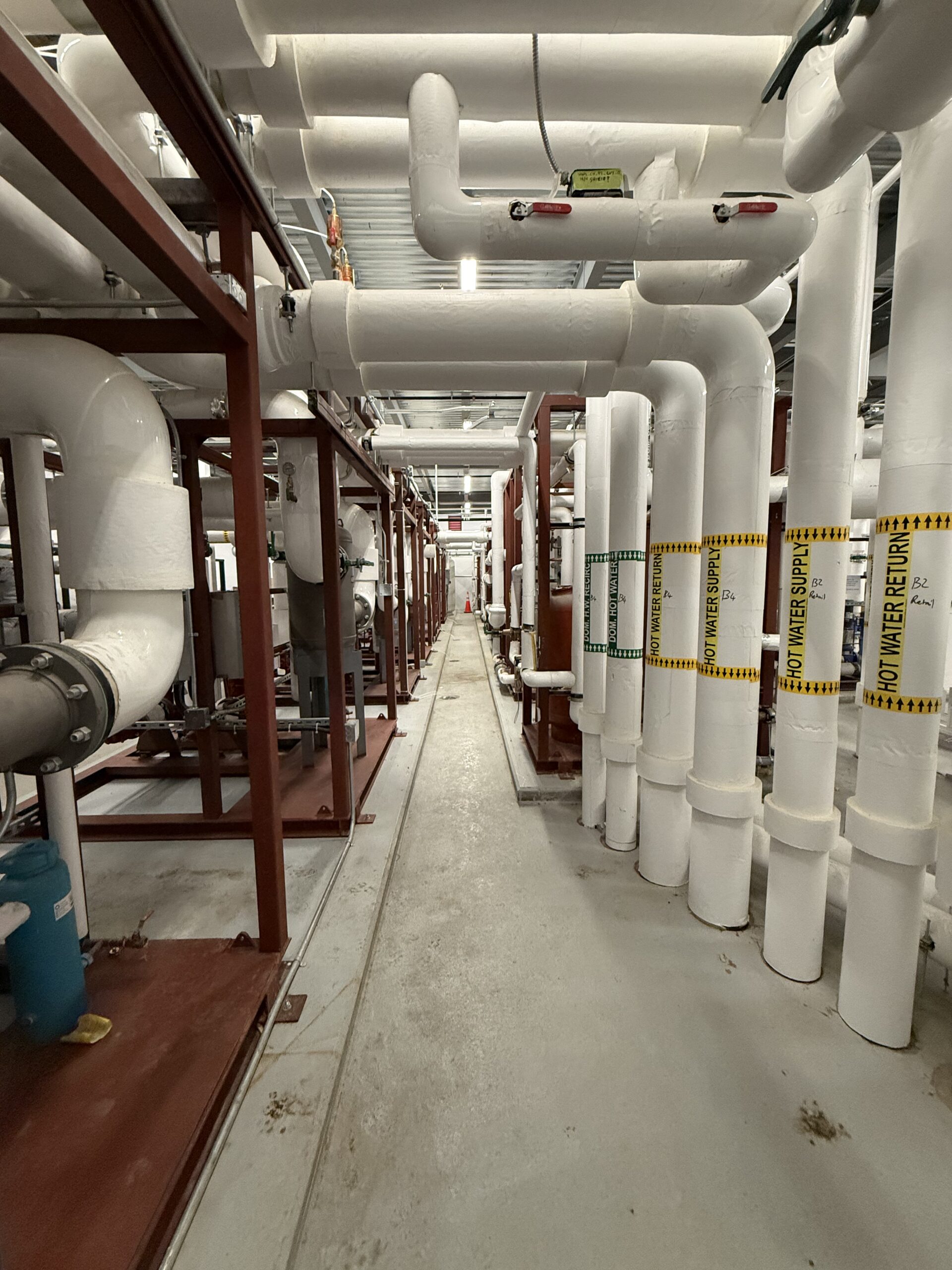
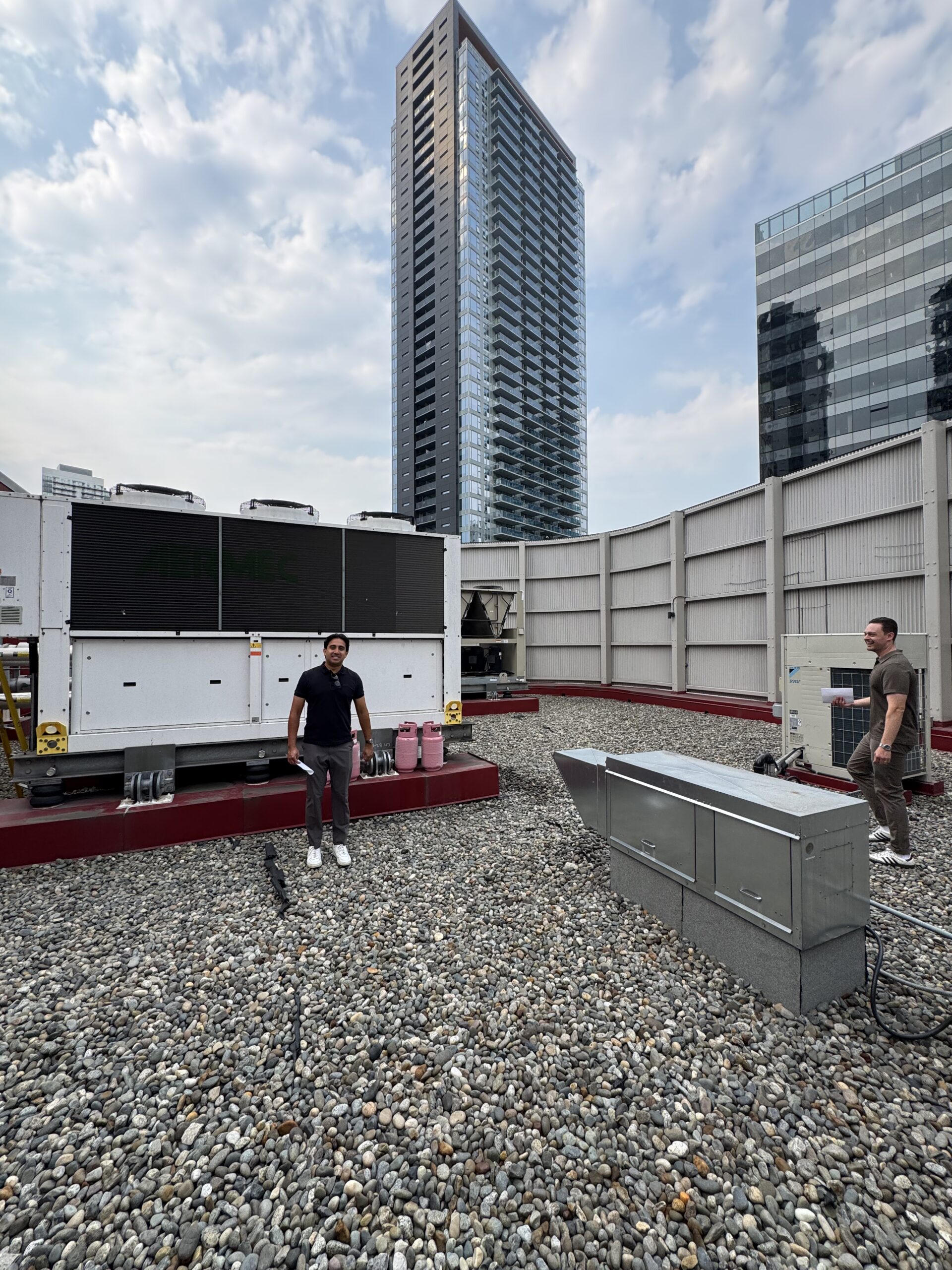
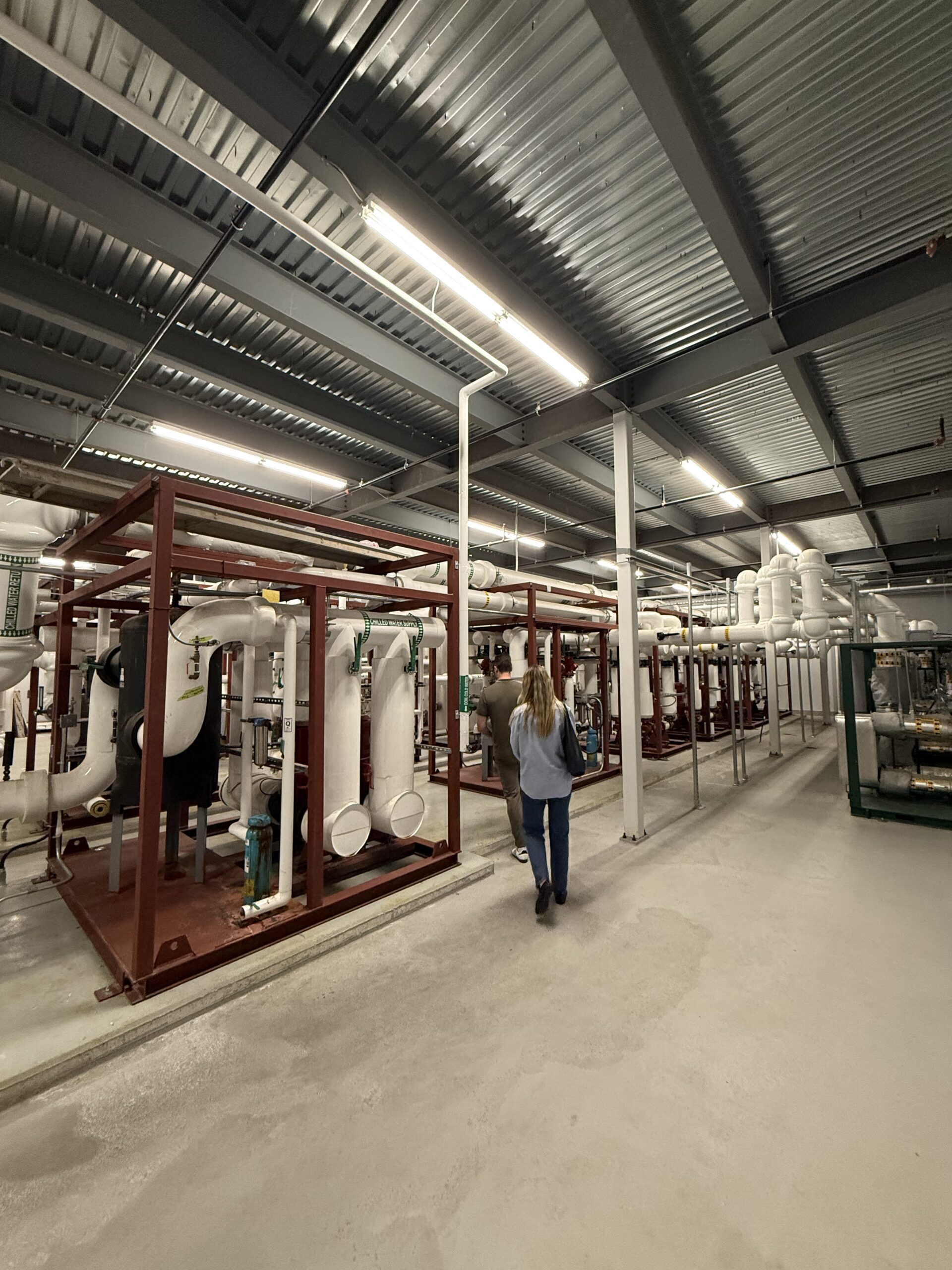
Rachel and Neil, from our Vancouver team recently joined Derrick Willms, Director of Operations at Warrington PCI Management, for a tour of King George Hub. They were treated to a behind-the-scenes look at the role of a Building Operator and the important part they play in keeping the day-to-day operations of a building or community running smoothly. This is a growing area for our business, and we’re excited to continue expanding our network as we uncover the people and stories behind the buildings we all rely on every day.
Q: Derrick, how did you get into building operations?
Derrick: I was actually working in a machine shop throughout high school, training to eventually become a Red Seal machinist. An opportunity was brought to me by a family member to explore the world of building operations, and with my vast experience with tools and machinery, it would give me an edge in this industry.
Q: In your opinion, what makes a strong Building Operator, and how do you keep them satisfied in their role?
Derrick: A strong Building Operator is someone who takes ownership. Technical skills are important, but the best operators are the ones who are curious, communicate well, follow through, and care about the building like it is their own. To keep a great operator satisfied, I think you need to give them trust, clear expectations, the right tools, and opportunities to grow. Good operators do not want to feel like they are just reacting to problems all day; they want structure, support, and to know that their work is valued.
Q: What’s most important to you when building out a team for a new property?
Derrick: Chemistry. This is extremely underrated in my opinion when building a team of operations staff members. Often, we are hunting for solo positions to fill a building or maybe a Junior Operator to join a more senior member, however, when you are looking to build a new team, I believe that ensuring everyone will empower each other to be better day in and day out and support one another through the various challenges ahead takes top priority.
Q: What are key credentials you look for in a new Building Operator?
Derrick: Credentials are helpful, especially things like a Power Engineering background, trade experience, safety training, or building systems education, but I try not to look at education alone. I am usually looking for someone who has a strong mechanical mindset, good communication skills, and the ability to think through a problem properly. You can teach systems and processes, but attitude, accountability, and willingness to learn are harder to train.
Q: How is the operations team structured across KGH? Is it one team covering everything, or does each phase have its own dedicated team?
Derrick: At KGH, the operations team has to function as one connected team, even though the site is made up of multiple phases with different systems, demands, and personalities. There are areas where certain operators may have more day-to-day focus or familiarity, but the goal is that the team is not working in silos. On a site this size, consistency is extremely important, so communication between operators and having shared standards across the property is what makes the structure work.
Q: How does your team coordinate with the leasing/property management side day to day?
Derrick: The coordination with leasing and property management is constant. Operations are usually the team turning the feedback, requests, and expectations into actual action on site. That can be anything from tenant move-ins, deficiency follow-up, access coordination, maintenance planning, amenity concerns, or vendor work. The better communication is between property management, leasing, and operations, the smoother the experience is for everyone using the building.
Q: What does the transition from construction handover to full operations look like from your seat and for your team?
Derrick: From my seat, the transition from construction handover to full operations is really where the building starts becoming real. Drawings, manuals, commissioning reports, warranties, deficiencies, training, access systems, life safety, cleaning, and vendor contracts all have to move from project mode into operating mode. It takes a lot of patience and follow-up because there are always things that look complete on paper but need to be tested, adjusted, or understood by the people who will actually be running the building day to day.
Q: What does it take operationally to bring a brand-new phase online while the rest of KGH is already fully occupied and running?
Derrick: Operationally, bringing a new phase like Tether online while the rest of KGH is fully occupied takes a lot of coordination and a lot of discipline. You are trying to protect the experience of the existing residents and tenants while also onboarding new systems, new spaces, new vendors, and new expectations. The challenge is making the new phase feel like it naturally belongs to the rest of the site, instead of operating like a separate project that never fully transitions into the larger property.
Q: What does a typical day look like managing shared amenities, security, and common areas across a site this size?
Derrick: A typical day is usually a balance between planned work and reacting to what the building needs in that moment. On a site of this size, shared amenities, security, and common areas all require constant attention because they directly affect the resident and tenant experience. The team is reviewing service requests, checking building systems, coordinating vendors, walking common areas, dealing with access or security concerns, and making sure small issues do not turn into larger ones.
Q: What role does the operations team play in shaping resident/tenant experience, beyond the physical building?
Derrick: Operations has a huge impact on the resident and tenant experience, even when people may not always notice it directly. A building that feels clean, safe, comfortable, and well managed does not happen by accident. The operations team sets the tone through response times, follow-up, maintenance standards, vendor coordination, and how issues are handled when something does go wrong. In my opinion, a strong operations team helps create confidence in the property.
Q: What operational lessons from earlier buildings did you apply to more recent buildings at KGH?
Derrick: One of the main lessons from earlier buildings is that you need to get standards, documentation, and communication in place as early as possible. If you wait until the building is fully occupied to figure out how maintenance will be tracked, how vendors will be managed, or how deficiencies will be followed up on, you are already behind. With newer buildings, I try to apply more structure earlier so the team has a clearer road map from day one.
We’re looking to connect with Building Operators who demonstrate some of the key qualities Derrick outlined during our tour. If you or anyone in your network is interested in getting in touch with us, we’d love to hear from you.
Co-founder of HighView Partners, Nicola brings over twenty years of experience in real estate recruitment across Canada. Nicola has worked with over 100 real estate employers and has successfully executed over 1000 searches throughout her career. Her focus on the real estate industry means she has built relationships with current and future real estate leaders. Her passion for connecting people who perform has created exceptional results and trusted relationships.
Nicola holds a degree in Psychology and a diploma in Life Coaching, and is a member of the Recruitment & Employment Confederation (REC). Her professional opinion has been featured in Canadian Property Management Magazine, and she has worked closely with BOMA. Nicola has also been a guest speaker at various industry events where she shares her expertise in attraction, retention and recruitment. Affiliated with Toronto CREW, Nicola is an advocate for women in real estate and supports various committees.
Outside of work, Nicola volunteers in her local community and supports several local charities. She enjoys travelling, reading, cooking (with a glass of red wine), and spending time with her family and friends.

Based in Vancouver, Richard leads HighView’s recruitment and talent search practice on the West Coast. Richard has been connecting people who perform in Canadian real estate since 2010. The industry regards him as one of its most diligent and professional recruiters. Originally from the UK and now a proud Canadian citizen, Richard has a far-reaching professional network, having also spent time in Sydney, Australia. Richard embodies HighView’s values and is resolute in his commitment to do the right thing by his clients and candidates.
Richard holds a BA in Criminology and International Politics. Over the past decade, Richard is proud to have helped hundreds of real estate professionals move forward in their careers. He is dedicated to staying on top of market news and industry trends, and is a familiar face at real estate associations, including NAIOP, BOMA, UDI, ICSC, and ULI.
Outside of work, Richard lives a healthy and active lifestyle. He thrives on setting new challenges and personal goals. From competitive road cycling, running and cross-country skiing, he can’t say no to a little friendly competition